
In today’s fitness culture, pushing harder is often celebrated. Many people believe that working out every single day is the fastest way to get results. However, this mindset can silently slow your progress and even harm your body.
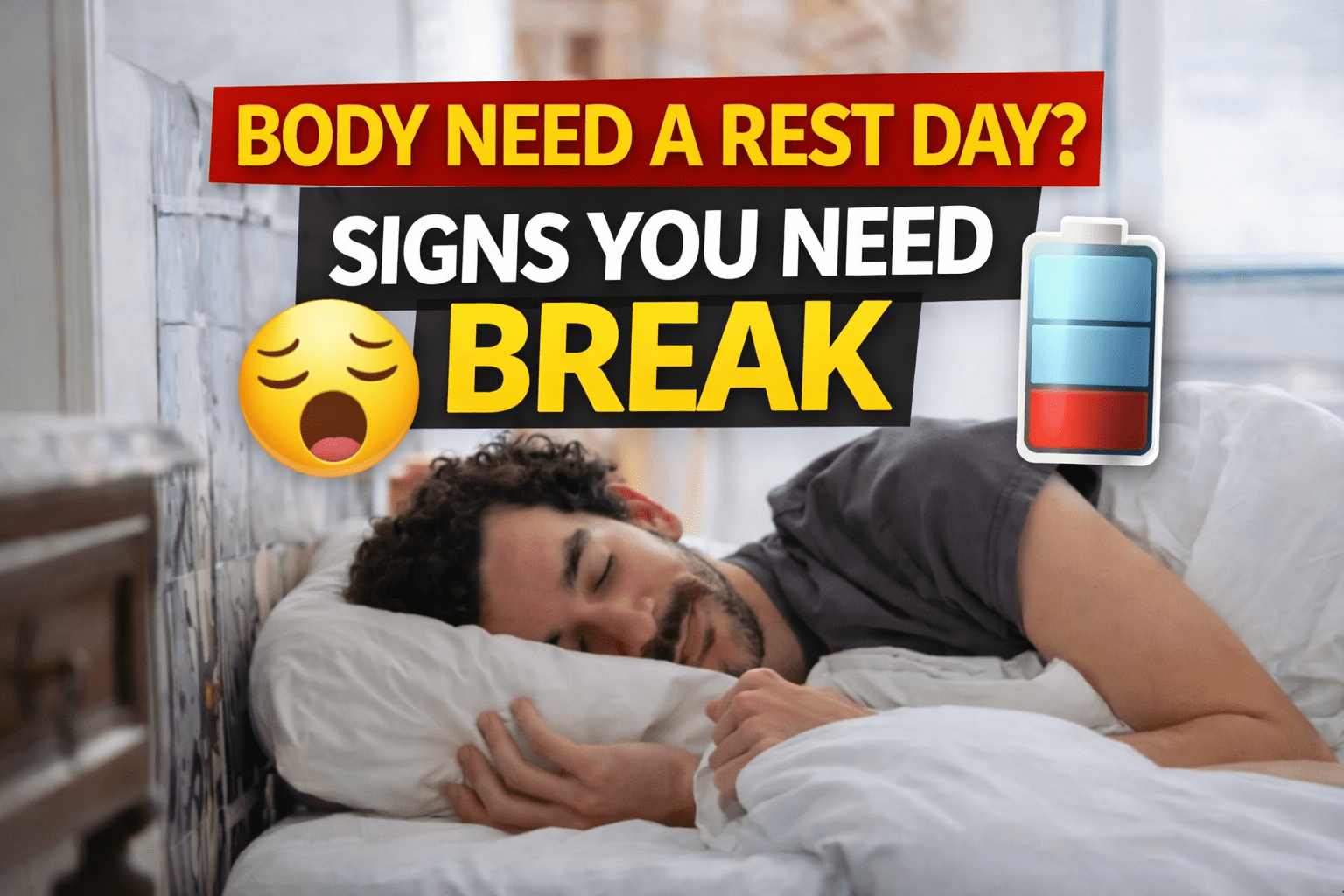
Understanding the signs you need a rest day is just as important as following a workout routine. Rest is not weakness. Rest is a critical part of growth, strength, and long-term fitness success.
This guide explains, in detail, how to recognize when your body needs a break, why rest days matter, and how proper recovery can actually help you build muscle, burn fat, and stay consistent with fitness.
Why Rest Days Are Essential for Fitness Progress
Exercise breaks down muscle fibers. Recovery is the phase where those muscles rebuild stronger than before. Without enough rest, your body never fully recovers, leading to fatigue, poor performance, and stalled results.
A rest day allows:
- Muscle repair and growth
- Nervous system recovery
- Hormonal balance
- Injury prevention
- Mental refreshment
Ignoring rest can lead to overtraining, which affects both physical and mental health.
What Is a Rest Day?
A rest day does not mean doing nothing all day. It means giving your body a break from intense physical stress.
There are two types of rest days:
- Complete rest: No structured exercise
- Active recovery: Light walking, stretching, mobility work
Knowing the signs you need a rest day helps you decide which type is best for you.
1. Constant Muscle Soreness That Never Goes Away
Mild soreness after a workout is normal. However, if muscle soreness lasts for several days and does not improve, it is a strong signal that your body needs recovery.
Persistent soreness means:
- Muscles are not repairing properly
- Inflammation is high
- Recovery systems are overloaded
This is one of the clearest signs you need a rest day.
2. Decrease in Strength and Performance
If you suddenly feel weaker during workouts or struggle to lift weights that were once manageable, your body may be fatigued.
Signs include:
- Reduced endurance
- Poor workout performance
- Slower movement speed
Instead of pushing harder, taking a rest day can restore strength faster.
3. Feeling Extremely Tired Even After Sleeping
Quality sleep should help you feel refreshed. If you wake up tired despite sleeping enough hours, your nervous system may be overstressed.
This happens when:
- Training intensity is too high
- Recovery time is insufficient
- Stress levels are elevated
Fatigue that does not improve is a major sign you need a rest day.
4. Lack of Motivation to Work Out
Loss of motivation is often overlooked. If you suddenly feel mentally exhausted, bored, or unwilling to exercise, your body and mind may be asking for rest.
Mental fatigue is just as real as physical fatigue. Rest days help reset motivation and focus.
5. Increased Risk of Injury
Overtraining weakens joints, tendons, and ligaments. Small aches can quickly turn into serious injuries if ignored.
Warning signs include:
- Joint pain
- Sharp discomfort during movement
- Reduced flexibility
A rest day can prevent long-term setbacks.
6. Elevated Resting Heart Rate
Your resting heart rate is a valuable recovery indicator. If it is higher than usual for several days, your body may be under stress.
This suggests:
- Incomplete recovery
- Nervous system fatigue
- Excessive training load
Monitoring this can help you spot signs you need a rest day early.
7. Poor Sleep Quality
Ironically, overtraining can disrupt sleep. If you find it difficult to fall asleep or stay asleep, your body may be overstimulated.
Sleep disturbances are a strong signal that recovery is lacking.
8. Mood Changes and Irritability
Exercise should improve mood, not worsen it. If you feel unusually irritable, anxious, or emotionally low, your body may be overwhelmed.
Hormonal imbalance caused by excessive training can affect emotional health.
9. Appetite Changes
Overtraining can reduce appetite or cause unusual cravings. This happens when stress hormones increase and digestion slows down.
Proper rest helps normalize hunger and digestion.
10. Frequent Illness or Weak Immunity
If you are getting sick more often, your immune system may be compromised due to lack of recovery.
Rest days support immune function and overall health.
How Often Should You Take a Rest Day?
The ideal number of rest days depends on:
- Training intensity
- Fitness level
- Age
- Lifestyle stress
General guideline:
- Beginners: 2–3 rest days per week
- Intermediate: 1–2 rest days per week
- Advanced: At least 1 rest day per week
Listening to your body is more important than following rigid schedules.

Active Recovery vs Complete Rest
Active recovery includes light movement that promotes blood flow without stress.
Examples:
- Walking
- Stretching
- Mobility exercises
- Gentle yoga
If fatigue is extreme, complete rest is the better option.
Can Rest Days Help With Muscle Growth?
Yes. Muscle growth happens during recovery, not during training. Without rest, muscles remain broken down and cannot rebuild.
Taking rest days can:
- Improve muscle definition
- Increase strength
- Enhance workout quality
This is why understanding the signs you need a rest day is crucial for long-term progress.
Rest Days and Fat Loss
Many people fear rest days will slow fat loss. In reality, rest improves fat loss by:
- Reducing cortisol levels
- Improving metabolism
- Supporting hormone balance
Recovery helps your body burn fat more efficiently.
Common Myths About Rest Days
Myth: Rest days make you lazy
Truth: Rest days make you stronger
Myth: You lose progress by resting
Truth: You lose progress by overtraining
Myth: Only beginners need rest
Truth: Everyone needs recovery
How to Plan Rest Days Properly
- Schedule rest days in advance
- Adjust based on how your body feels
- Avoid guilt associated with rest
- Focus on sleep and nutrition
A smart fitness plan always includes recovery.
Nutrition Tips for Rest Days
- Eat enough protein
- Stay hydrated
- Include fruits and vegetables
- Avoid excessive junk food
Nutrition supports recovery as much as rest.
Long-Term Benefits of Taking Rest Days
- Improved performance
- Reduced injury risk
- Better mental health
- Sustainable fitness lifestyle
Fitness is a marathon, not a sprint.
ow Rest Days Improve Long-Term Fitness Results
Many people believe that training every day leads to faster results. In reality, the opposite is often true. Ignoring the signs you need a rest day can slow down progress and increase injury risk.
Rest days allow your muscles, joints, and nervous system to recover. This recovery phase is when your body adapts and becomes stronger. Without rest, your performance gradually declines.
A properly planned rest day helps you return to workouts feeling refreshed, motivated, and stronger than before.
Physical Signs You Need a Rest Day
Your body always sends signals when it needs recovery. Learning to recognize these signs is essential for sustainable fitness.
Constant Muscle Soreness
If soreness lasts longer than 72 hours, it is one of the strongest signs you need a rest day. Muscles require time to repair microscopic tears caused by workouts.
Reduced Strength and Endurance
When your usual weights feel heavier or your stamina drops, it indicates fatigue. This is your body asking for rest, not more intensity.
Joint Pain and Stiffness
Sharp or lingering joint pain should never be ignored. Rest days reduce inflammation and prevent long-term damage.
Mental and Emotional Signs You Need a Rest Day
Fitness is not only physical. Mental fatigue can be just as harmful.
Lack of Motivation
If you dread workouts instead of enjoying them, it is a clear sign you need a rest day. Mental burnout reduces consistency.
Poor Focus During Workouts
Difficulty concentrating on form and breathing often means your nervous system is overstressed.
Increased Irritability or Stress
Overtraining can increase cortisol levels, making you feel anxious or irritated.

Performance-Based Signs You Need a Rest Day
Your workout performance is a powerful indicator of recovery needs.
- Slower reaction times
- Poor balance and coordination
- Longer warm-up times
- Declining workout quality
These performance drops often appear before injuries, making rest days crucial.
Why Ignoring Rest Days Is Risky
Ignoring the signs you need a rest day can lead to overtraining syndrome. This condition affects hormones, sleep, immunity, and mood.
Common Risks
- Chronic fatigue
- Muscle loss instead of growth
- Weakened immune system
- Increased injury risk
Long-term success in fitness requires balance, not extremes.
What Happens in Your Body on a Rest Day
During rest days, your body repairs muscle fibers and replenishes energy stores. Growth hormone levels increase, supporting muscle recovery.
This biological process is essential for muscle growth, fat loss, and strength gains. Rest days are productive days, even if you are not training.
Active Rest vs Complete Rest
Not all rest days require complete inactivity.
Active Rest Day
- Light walking
- Stretching
- Yoga or mobility work
- Deep breathing exercises
Active rest improves blood flow and speeds recovery.
Complete Rest Day
Sometimes your body needs full rest. This means no structured exercise, allowing total recovery.
Listening to your body helps you choose the right type of rest.
How Often Should You Take a Rest Day?
There is no universal rule, but general guidelines help.
- Beginners: 2–3 rest days per week
- Intermediate: 1–2 rest days per week
- Advanced: 1 rest day per week or as needed
The signs you need a rest day are more important than fixed schedules.
Rest Days and Muscle Growth
Muscle growth does not happen during workouts. It happens during recovery. Rest days allow protein synthesis to occur, leading to stronger muscles.
Training without rest can break down muscle tissue faster than it rebuilds.
Rest Days and Fat Loss
Rest days support fat loss by regulating hormones and reducing stress. Overtraining increases cortisol, which can slow fat loss.
Balanced rest improves metabolism and workout quality, supporting long-term fat loss.
Sleep: The Most Important Form of Rest
Sleep is the foundation of recovery. Poor sleep amplifies the signs you need a rest day.
Aim for:
- 7–9 hours of quality sleep
- Consistent sleep schedule
- Reduced screen time before bed
Good sleep enhances both physical and mental performance.
Nutrition on Rest Days
Rest days do not mean skipping nutrition.
Key Nutrition Tips
- Maintain adequate protein intake
- Stay hydrated
- Focus on whole foods
- Avoid extreme calorie restriction
Nutrition supports recovery just as much as training.
How Rest Days Improve Workout Consistency
Many people quit fitness because of burnout. Rest days prevent this by making workouts enjoyable and sustainable.
A rested body performs better, reducing frustration and increasing motivation.
Common Myths About Rest Days
Myth: Rest Days Make You Lazy
Truth: Rest days make you stronger and more consistent.
Myth: You Lose Progress on Rest Days
Truth: Recovery preserves and enhances progress.
Myth: Only Beginners Need Rest Days
Truth: Even elite athletes prioritize recovery.

How to Plan Rest Days Smartly
Instead of random rest, plan recovery strategically.
- Schedule rest after intense sessions
- Rotate muscle groups
- Track energy levels
- Adjust based on lifestyle stress
Smart planning prevents burnout.
Rest Days for Home Workouts and Gym Training
Whether you train at home or in the gym, recovery needs remain the same. Bodyweight workouts also stress muscles and joints.
Ignoring rest days in home workouts can still cause overtraining.
Listening to Your Body: The Ultimate Skill
The most important fitness skill is awareness. Learning to recognize the signs you need a rest day helps you train smarter.
Fitness is a lifelong journey, not a short challenge.
Final Thoughts on Rest Days
Rest days are not a weakness. They are a strategy. Ignoring recovery slows progress, increases injury risk, and reduces motivation.
Recognizing the signs you need a rest day allows you to train efficiently, recover properly, and achieve long-term results.
Final Conclusion
If you want consistent progress, better performance, and a healthier body, rest days are essential. Training hard is important, but recovering smart is what truly delivers results.
Listen to your body. Respect recovery. Train with balance.