

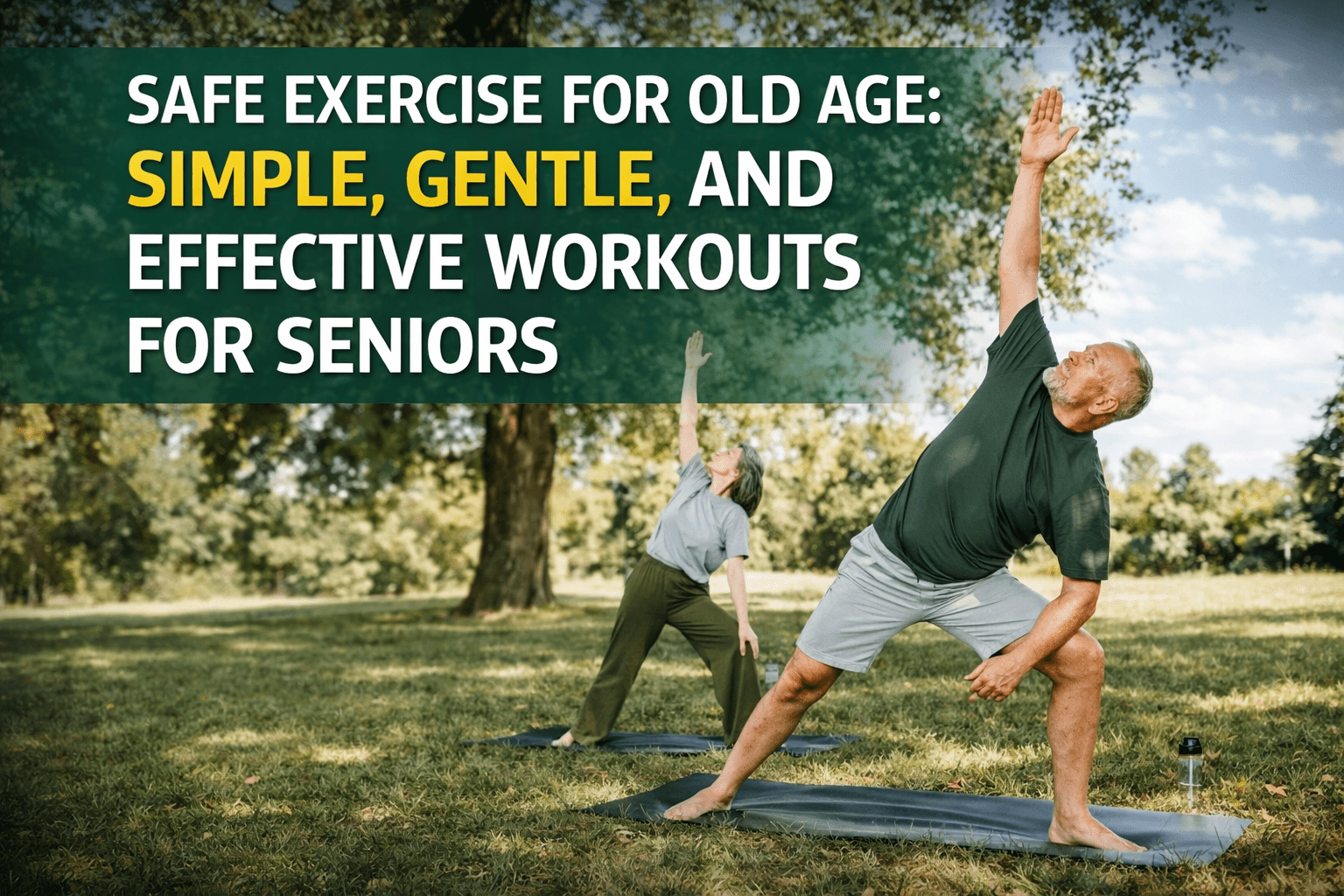
As people grow older, staying active becomes more important than ever. Regular physical movement helps maintain strength, balance, flexibility, and overall independence. However, exercise in later years must be approached with care. That is why understanding safe exercise for old age is essential.
This guide is designed to explain everything clearly and simply. It focuses on safe, gentle, and effective exercises that older adults can do without fear. The goal is not intensity, but health, mobility, and long-term well-being.
Why Exercise Is Important in Old Age
Aging naturally brings changes to muscles, joints, bones, and energy levels. Many seniors avoid exercise due to fear of injury, pain, or exhaustion. But avoiding movement often creates more problems.
Safe physical activity helps:
- Maintain muscle strength
- Improve balance and coordination
- Reduce joint stiffness
- Support heart health
- Improve mood and mental clarity
When done correctly, safe exercise for old age improves quality of life rather than putting it at risk.
What Makes Exercise “Safe” for Older Adults?
Safety in exercise is not about avoiding movement. It is about choosing the right type of movement and performing it correctly.
Safe exercise for seniors includes:
- Low-impact movements
- Controlled pace
- Proper posture
- Comfortable breathing
- Adequate rest
Exercises should never cause sharp pain, dizziness, or extreme fatigue.
Common Exercise Mistakes Older Adults Should Avoid
Before starting any routine, it is important to understand what not to do.
Common mistakes include:
- Sudden high-intensity workouts
- Skipping warm-up and cool-down
- Ignoring pain or discomfort
- Poor posture during movements
- Overexertion without rest
Avoiding these mistakes makes safe exercise for old age truly effective.
Best Types of Safe Exercise for Old Age
Not all exercises are suitable for seniors. The following types are widely recommended because they are gentle yet effective.
1. Walking – The Safest Exercise for Seniors
Walking is one of the simplest and safest forms of physical activity.
Benefits include:
- Improves heart health
- Strengthens leg muscles
- Enhances balance
- Reduces stiffness
Walking can be done indoors or outdoors, at any comfortable pace.
2. Chair Exercises for Stability and Safety
Chair-based exercises are ideal for those with balance issues.
Examples include:
- Seated leg lifts
- Arm raises
- Ankle rotations
- Seated marching
Chair exercises are a core part of safe exercise for old age, especially for beginners.
3. Stretching Exercises for Flexibility
Flexibility decreases with age, leading to stiffness and discomfort. Gentle stretching helps maintain mobility.
Stretching improves:
- Joint movement
- Muscle relaxation
- Posture
- Blood circulation
Stretch slowly and never force a stretch.
4. Balance Exercises to Prevent Falls
Falls are one of the biggest health risks for older adults. Balance training is essential.
Safe balance exercises include:
- Standing on one foot (with support)
- Heel-to-toe walking
- Side leg raises
Improved balance increases confidence and independence.
5. Light Strength Training Using Body Weight
Strength training does not mean heavy weights. Gentle resistance strengthens muscles and bones.
Safe strength exercises include:
- Wall push-ups
- Sit-to-stand movements
- Light resistance band exercises
This form of safe exercise for old age helps preserve muscle mass.
🧾 Table: Safe Exercises and Their Benefits
| Exercise Type | Safety Level | Main Benefits |
|---|---|---|
| Walking | Very High | Heart health, endurance |
| Chair Exercises | Very High | Stability, mobility |
| Stretching | High | Flexibility, relaxation |
| Balance Exercises | High | Fall prevention |
| Light Strength | Moderate | Muscle and bone strength |
How Often Should Seniors Exercise?
Consistency matters more than intensity.
General guidelines:
- 20–30 minutes per day
- 4–6 days per week
- Short breaks as needed
Even light daily movement supports long-term health.
Signs You Are Exercising Safely
During and after exercise, the body sends signals.
Safe signs include:
- Mild muscle warmth
- Slight increase in breathing
- Feeling energized afterward
Stop exercising if there is:
- Sharp pain
- Dizziness
- Chest discomfort
- Shortness of breath
Listening to the body is essential in safe exercise for old age.
Warm-Up and Cool-Down: A Must for Seniors
Never skip warm-up and cool-down sessions.
Warm-Up Benefits
- Prepares muscles
- Improves circulation
- Reduces injury risk
Cool-Down Benefits
- Gradually lowers heart rate
- Prevents stiffness
- Helps relaxation
Simple breathing and slow movements are sufficient.
Mental Health Benefits of Safe Exercise in Old Age
Exercise supports not only the body but also the mind.
Mental benefits include:
- Reduced stress
- Improved mood
- Better sleep quality
- Increased confidence
Regular movement promotes emotional balance and mental clarity.
![pexels media 8939955[1]](https://powervedafit.com/wp-content/uploads/2025/12/pexels-media-89399551-1024x683.jpeg)
Safe Exercise at Home vs Outdoors
Both options are effective when done safely.
Home Exercise
- Controlled environment
- Less risk of falls
- Convenient
Outdoor Exercise
- Fresh air
- Vitamin D exposure
- Mood improvement
Choose what feels comfortable and safe.
Nutrition and Hydration for Active Seniors
Exercise works best with proper nutrition.
Basic guidelines:
- Drink enough water
- Eat balanced meals
- Include protein for muscle health
- Avoid heavy meals before exercise
Good nutrition supports recovery and energy.
How Long Before Results Appear?
Results vary based on consistency and health condition.
General timeline:
- Better energy: 1–2 weeks
- Improved balance: 3–4 weeks
- Strength improvement: 4–6 weeks
Progress is gradual but meaningful.
Can Seniors Exercise Every Day?
Yes, if the exercise is gentle and varied.
Alternate between:
- Walking days
- Stretching days
- Balance-focused days
Rest days are equally important.
Safe Exercise for Old Age with Health Conditions
Many seniors live with conditions like arthritis, diabetes, or high blood pressure. Gentle movement is still beneficial.
Key rules:
- Move slowly
- Avoid holding breath
- Keep intensity low
- Stop if discomfort increases
Always prioritize comfort and control.
Creating a Simple Daily Exercise Routine
A balanced routine might include:
- 10 minutes walking
- 5 minutes stretching
- 5 minutes balance exercises
This structure supports overall wellness.
Safe Exercise for Old Age: A Complete Guide to Staying Active, Healthy, and Injury-Free
Aging is a natural process, but losing strength, balance, and independence does not have to be. One of the most powerful tools for maintaining health in later years is regular physical activity. However, exercise for seniors must be approached carefully. That is why understanding safe exercise for old age is extremely important.
This detailed guide explains how older adults can stay active safely, reduce health risks, and improve overall quality of life through simple, low-risk exercises designed specifically for aging bodies.
Why Safe Exercise Is Essential in Old Age
As people grow older, the body goes through many changes. Muscle mass decreases, bones become weaker, joints lose flexibility, and balance may decline. Without physical activity, these changes happen faster and increase the risk of falls, chronic illness, and loss of independence.
Safe exercise for old age helps slow down these changes while supporting both physical and mental health.
Key Benefits of Safe Exercise for Seniors
- Improves balance and coordination
- Strengthens muscles and bones
- Reduces joint stiffness and pain
- Supports heart and lung health
- Improves mood and mental clarity
- Enhances independence in daily life
Exercise does not need to be intense to be effective. Consistency and safety matter far more than intensity.
What Makes Exercise “Safe” for Older Adults?
Safe exercise focuses on low impact, controlled movements, and proper recovery. It avoids sudden strain, heavy loads, or complex movements that increase injury risk.
Principles of Safe Exercise for Old Age
- Low impact on joints
- Slow and controlled movements
- Proper warm-up and cool-down
- Attention to breathing
- Adequate rest
Following these principles ensures long-term benefits without unnecessary risk.
Health Conditions to Consider Before Starting
Many older adults live with chronic conditions such as arthritis, high blood pressure, diabetes, or heart issues. Safe exercise programs should always consider these factors.
Common Conditions and Exercise Considerations
| Condition | Exercise Focus |
|---|---|
| Arthritis | Gentle movement, flexibility |
| High blood pressure | Light cardio, breathing control |
| Diabetes | Regular low-intensity activity |
| Osteoporosis | Balance and strength exercises |
| Joint pain | Low-impact movements |
A doctor’s advice is recommended before starting any new exercise routine, especially for individuals with medical conditions.
Best Types of Safe Exercise for Old Age
Not all exercises are suitable for seniors. The following categories are widely recommended because they improve health while minimizing injury risk.
1. Walking – The Safest Exercise for Seniors
Walking is one of the most effective and safest forms of exercise for older adults. It improves cardiovascular health, strengthens leg muscles, and supports mental well-being.
Why Walking Is Ideal
- No equipment required
- Low stress on joints
- Easy to control intensity
- Can be done anywhere
Even 20–30 minutes of walking most days of the week can significantly improve health.
2. Chair Exercises for Stability and Strength
Chair exercises are a core part of safe exercise for old age, especially for individuals with balance issues.
Examples of Chair Exercises
- Seated leg lifts
- Arm raises
- Ankle rotations
- Seated marching
These exercises build strength while providing full support, reducing fall risk.
![pexels media 8940488[1]](https://powervedafit.com/wp-content/uploads/2025/12/pexels-media-89404881-1024x683.jpeg)
3. Stretching for Flexibility and Joint Health
Flexibility decreases with age, leading to stiffness and discomfort. Gentle stretching improves mobility and posture.
Benefits of Stretching
- Reduces joint stiffness
- Improves range of motion
- Supports better posture
- Reduces muscle tension
Stretching should always be slow and pain-free.
4. Balance Exercises to Prevent Falls
Falls are one of the biggest risks in old age. Balance training plays a crucial role in injury prevention.
Safe Balance Exercises
- Standing on one foot with support
- Heel-to-toe walking
- Side leg raises
Practicing balance exercises regularly improves coordination and confidence while walking.
5. Light Strength Training for Bone Health
Muscle and bone loss accelerate with age. Light strength training helps maintain strength without strain.
Safe Strength Options
- Bodyweight movements
- Resistance bands
- Light hand weights
Strength training improves daily function such as climbing stairs, standing up, and carrying groceries.
Weekly Safe Exercise Plan for Old Age
A structured routine improves consistency and safety.
| Day | Activity |
|---|---|
| Monday | Walking + stretching |
| Tuesday | Chair exercises |
| Wednesday | Balance exercises |
| Thursday | Rest or light walking |
| Friday | Strength training |
| Saturday | Stretching + breathing |
| Sunday | Active rest |
This balanced plan supports recovery and reduces overuse injuries.
Warm-Up and Cool-Down: Non-Negotiable for Seniors
Skipping warm-up and cool-down increases injury risk, especially in older adults.
Warm-Up Benefits
- Increases blood flow
- Prepares joints and muscles
- Reduces stiffness
Cool-Down Benefits
- Lowers heart rate safely
- Reduces muscle soreness
- Promotes relaxation
A proper warm-up and cool-down should last 5–10 minutes each.
Signs an Exercise Is NOT Safe
Understanding warning signs is essential for injury prevention.
Stop Exercise If There Is:
- Sharp pain
- Dizziness
- Shortness of breath
- Chest discomfort
- Loss of balance
Listening to the body is a key part of safe exercise for old age.
Mental Health Benefits of Safe Exercise in Old Age
Exercise supports more than just physical health. It also improves mental and emotional well-being.
Mental Benefits
- Reduces stress and anxiety
- Improves sleep quality
- Enhances memory
- Boosts confidence
Regular physical activity is strongly linked to better cognitive health in seniors.
Nutrition and Hydration Support Safe Exercise
Exercise works best when combined with proper nutrition.
Basic Nutrition Tips
- Adequate protein intake
- Plenty of fruits and vegetables
- Proper hydration
- Avoid heavy meals before exercise
Nutrition supports recovery, energy levels, and muscle maintenance.
Common Myths About Exercise in Old Age
Many seniors avoid exercise due to misinformation.
Myth vs Reality
| Myth | Reality |
|---|---|
| Exercise is dangerous | Safe exercise reduces risk |
| Too old to start | Benefits at any age |
| Rest is better | Movement improves health |
| Pain is normal | Pain should be avoided |
Education removes fear and encourages safe activity.
How Long Before Results Are Noticeable?
Results vary, but many benefits appear quickly.
- Better mobility: 2–3 weeks
- Improved balance: 3–4 weeks
- Increased strength: 4–6 weeks
- Better mood and sleep: 1–2 weeks
Consistency is the most important factor.
Final Safety Tips for Older Adults
- Exercise in well-lit areas
- Wear supportive footwear
- Keep water nearby
- Avoid slippery surfaces
- Exercise with support if needed
Safety always comes first.
Final Thoughts
Safe exercise for old age is not about pushing limits. It is about maintaining movement, independence, and quality of life. With the right exercises, proper guidance, and consistency, older adults can stay active, confident, and healthy for years to come.
Aging does not mean stopping movement. It means moving smarter.