


The fitness world is changing rapidly. Gym memberships are no longer the only path to a healthy and strong body. As we move into a new era of fitness, home workouts 2026 are becoming the preferred choice for millions of people across the United States.
People are choosing flexibility, privacy, and efficiency over crowded gyms. With better workout knowledge, digital access, and lifestyle changes, home workouts are no longer a trend — they are the future of fitness.
This guide explains everything you need to know about home workouts 2026, why they are growing, how they work, and how anyone can stay fit without stepping into a gym.
Why Home Workouts Are Dominating Fitness in 2026
Fitness habits are evolving. Modern lifestyles demand solutions that are simple, time-efficient, and adaptable. Home workouts meet all these needs.
Key Reasons Behind the Growth of Home Workouts
- Busy schedules and remote work culture
- Rising gym costs
- Preference for privacy
- Convenience and flexibility
- Better understanding of bodyweight training
In home workouts 2026, people focus on consistency rather than complexity. Short, effective workouts are replacing long gym sessions.
What Are Home Workouts?
Home workouts are exercise routines performed at home using bodyweight or minimal space. No machines, no gym environment, and no complicated setup.
Home workouts 2026 emphasize:
- Functional movement
- Full body activation
- Time-efficient routines
- Sustainable fitness habits
They are suitable for beginners, professionals, and even advanced fitness enthusiasts.
Benefits of Home Workouts in 2026
1. Time Efficiency
Home workouts eliminate travel time. You can train anytime, anywhere.
2. Cost-Effective
No gym fees, no equipment purchases, no monthly commitments.
3. Consistency
When workouts are easy to start, consistency improves automatically.
4. Full Body Fitness
Modern home workouts focus on compound movements that train multiple muscles at once.
5. Mental Comfort
Working out at home reduces anxiety and increases focus.
Are Home Workouts Really Effective?
Yes — when done correctly.
Research and practical experience show that home workouts 2026 can:
- Burn fat effectively
- Build lean muscle
- Improve mobility and flexibility
- Increase stamina and endurance
Effectiveness depends on exercise selection, intensity, and consistency, not location.
The Science Behind Home Workouts
Home workouts rely heavily on:
- Bodyweight resistance
- Time under tension
- Cardiovascular engagement
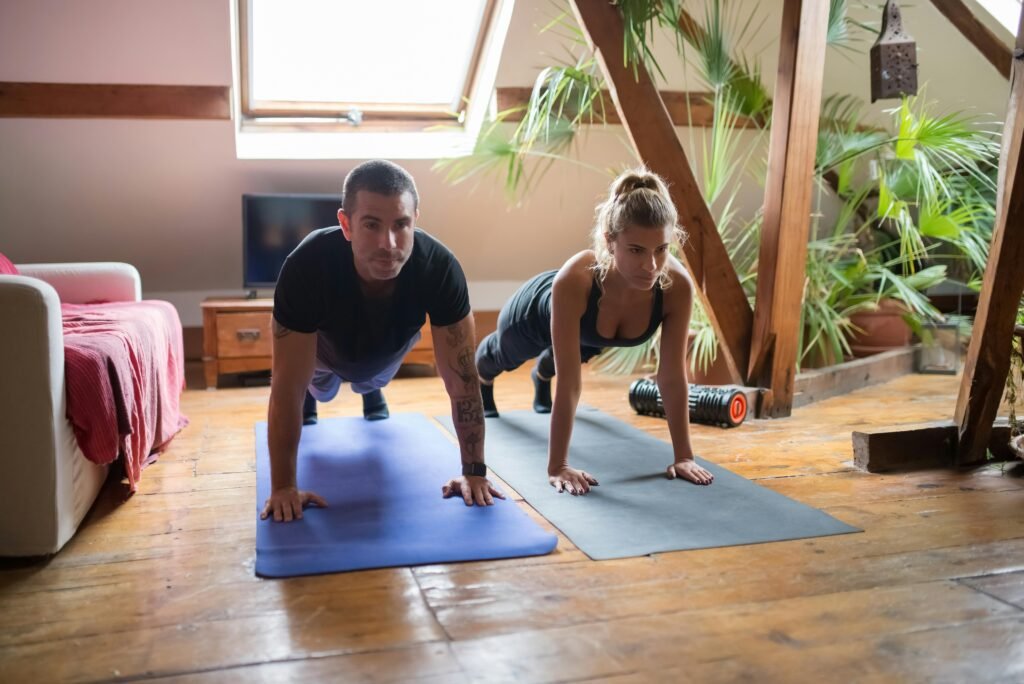
Exercises like squats, push-ups, planks, and lunges activate multiple muscle groups, creating high energy demand.
This makes home workouts 2026 both efficient and sustainable.
Who Should Choose Home Workouts?
Home workouts are ideal for:
- Beginners starting fitness
- Busy professionals
- Students
- People avoiding gyms
- Anyone seeking flexible fitness
Age and experience are not barriers.
Typical Structure of Home Workouts in 2026
Most home workouts follow this structure:
| Phase | Duration | Purpose |
|---|---|---|
| Warm-up | 3–5 min | Injury prevention |
| Main workout | 15–25 min | Strength + fat burn |
| Cool down | 3–5 min | Recovery |
This structure keeps workouts short but effective.
Popular Home Workout Styles in 2026
Full Body Home Workouts
Train all major muscles in one session.
Short Time Workouts
15–20 minute routines for busy lifestyles.
Low-Impact Home Workouts
Joint-friendly movements for beginners.
Strength-Focused Bodyweight Training
Build muscle using body resistance.
All these styles fall under home workouts 2026 trends.
Common Exercises Used in Home Workouts
- Squats
- Push-ups
- Lunges
- Planks
- Mountain climbers
- Glute bridges
These exercises require no equipment and deliver excellent results.
How Often Should You Do Home Workouts?
Recommended frequency:
- Beginners: 3–4 days per week
- Intermediate: 4–5 days per week
- Advanced: 5–6 days per week
Rest and recovery remain important in home workouts 2026.
Nutrition and Home Workouts
Fitness results improve when workouts are supported by proper nutrition.
Basic principles:
- Adequate protein intake
- Balanced meals
- Hydration
- Avoid excessive junk food
No extreme dieting is required.
Common Mistakes in Home Workouts
Many people fail due to:
- Inconsistent training
- Poor exercise form
- Skipping warm-ups
- Overtraining
- Lack of recovery
Avoiding these mistakes ensures long-term success.
How to Stay Motivated With Home Workouts
Motivation is a challenge for home fitness.
Helpful strategies:
- Fixed workout schedule
- Progress tracking
- Simple goals
- Comfortable workout space
Consistency matters more than intensity.
Mental Health Benefits of Home Workouts
In home workouts 2026, mental health is equally important.
Benefits include:
- Reduced stress
- Improved focus
- Better sleep
- Increased confidence
Short workouts often lead to long-lasting mental clarity.
Are Home Workouts Suitable for Long-Term Fitness?
Yes. Home workouts are sustainable because they adapt to lifestyle changes.
You can increase difficulty by:
- Increasing repetitions
- Reducing rest time
- Improving movement control
Progression keeps workouts effective.
Home Workouts vs Gym Workouts
Home workouts offer:
- Flexibility
- Convenience
- Lower cost
Gyms offer:
- Equipment variety
- Social environment
In home workouts 2026, more people prefer independence and simplicity.
Future of Home Workouts
Technology and fitness knowledge are improving rapidly. Home workouts are becoming smarter, more personalized, and more accessible.
Home workouts 2026 are not temporary — they represent the future of fitness culture.
The Rise of Home Workouts in 2026
In 2026, fitness is no longer limited to gyms or expensive equipment. Home workouts have evolved into a complete fitness solution supported by science, lifestyle changes, and digital awareness. More people now prefer home workouts 2026 because they offer flexibility, privacy, and long-term sustainability.
Unlike traditional gym routines, modern home workouts focus on functional movement, mobility, and overall health rather than just muscle size.
Why Home Workouts Are Dominating Fitness in 2026
The global shift toward remote work and flexible schedules has changed how people approach fitness. Home workouts align perfectly with this lifestyle.
Key Reasons for Popularity
- Time-efficient routines
- No commute or gym dependency
- Lower injury risk
- Better consistency
- Personalized workout flow
In 2026, fitness is about fitting workouts into life — not fitting life around workouts.
Home Workouts 2026: What’s Different From Before?
Earlier, home workouts were considered a backup option. In 2026, they are a primary fitness method.
Major Differences
- Smarter workout structures
- Focus on recovery and mobility
- Short but intense sessions
- Full-body movement patterns
- Minimal or zero equipment
This evolution makes home workouts 2026 more effective than ever.
Full Body Training: The Core of Home Workouts 2026
Full body routines dominate home fitness because they activate multiple muscle groups simultaneously. This improves calorie burn, muscle tone, and cardiovascular health.
Instead of isolating muscles, modern home workouts emphasize:
- Push movements
- Pull movements
- Squats and lunges
- Core stability
- Balance and coordination
This approach delivers better results in less time.
Sample Weekly Home Workout Structure (2026 Style)
Here is a practical structure followed by many people in 2026:
| Day | Focus |
|---|---|
| Monday | Full body strength |
| Tuesday | Mobility + stretching |
| Wednesday | Cardio-based home workout |
| Thursday | Rest or light walking |
| Friday | Full body endurance |
| Weekend | Active recovery |
This structure supports long-term fitness without burnout.
How Home Workouts Improve Consistency
Consistency is the most important factor in fitness success. Home workouts remove common excuses such as lack of time, crowded gyms, or travel fatigue.
When workouts are simple and accessible, people naturally stick to them longer. That’s why home workouts 2026 show higher adherence rates compared to gym memberships.

Mental Health Benefits of Home Workouts
Fitness in 2026 is closely connected with mental well-being. Home workouts reduce performance pressure and allow people to train at their own pace.
Mental Benefits Include:
- Reduced stress
- Improved focus
- Better mood regulation
- Increased self-confidence
Short daily sessions create a positive mental rhythm.
Injury Prevention and Recovery at Home
Another major advantage of home workouts is safety. Controlled movements and bodyweight exercises reduce strain on joints.
Modern routines include:
- Warm-up mobility drills
- Controlled tempo movements
- Stretching-based cooldowns
This reduces injuries and improves long-term joint health.
Home Workouts and Fat Loss in 2026
Fat loss is no longer about extreme workouts. In 2026, sustainable fat loss comes from consistency and metabolic balance.
Home workouts support fat loss by:
- Increasing daily movement
- Improving insulin sensitivity
- Boosting metabolism
- Reducing stress-related fat storage
This makes them ideal for long-term results.
Can Home Workouts Build Muscle in 2026?
Yes. Muscle growth depends on resistance, tension, and progression — not equipment.
Bodyweight progressions used in home workouts 2026 include:
- Tempo control
- Increased repetitions
- Reduced rest periods
- Advanced variations
These methods provide sufficient stimulus for lean muscle development.
Home Workouts for Busy Professionals
Busy schedules are no longer a barrier to fitness. Home workouts fit into:
- Morning routines
- Lunch breaks
- Evening wind-down sessions
Even 20–30 minutes daily is enough to maintain fitness.
Tracking Progress Without Equipment
In 2026, progress tracking is simpler and more mindful.
Instead of scales, people track:
- Energy levels
- Workout consistency
- Strength improvements
- Mobility gains
This creates a healthier relationship with fitness.
Common Mistakes to Avoid With Home Workouts
Despite their simplicity, mistakes can slow progress.
Avoid:
- Skipping warm-ups
- Training without structure
- Ignoring rest days
- Repeating the same routine for months
Smart planning ensures continuous improvement.
The Rise of Home Workouts in 2026
In 2026, fitness is no longer limited to gyms or expensive equipment. Home workouts have evolved into a complete fitness solution supported by science, lifestyle changes, and digital awareness. More people now prefer home workouts 2026 because they offer flexibility, privacy, and long-term sustainability.
Unlike traditional gym routines, modern home workouts focus on functional movement, mobility, and overall health rather than just muscle size.
Why Home Workouts Are Dominating Fitness in 2026
The global shift toward remote work and flexible schedules has changed how people approach fitness. Home workouts align perfectly with this lifestyle.
Key Reasons for Popularity
- Time-efficient routines
- No commute or gym dependency
- Lower injury risk
- Better consistency
- Personalized workout flow
In 2026, fitness is about fitting workouts into life — not fitting life around workouts.
Home Workouts 2026: What’s Different From Before?
Earlier, home workouts were considered a backup option. In 2026, they are a primary fitness method.
Major Differences
- Smarter workout structures
- Focus on recovery and mobility
- Short but intense sessions
- Full-body movement patterns
- Minimal or zero equipment
This evolution makes home workouts 2026 more effective than ever.
Full Body Training: The Core of Home Workouts 2026
Full body routines dominate home fitness because they activate multiple muscle groups simultaneously. This improves calorie burn, muscle tone, and cardiovascular health.
Instead of isolating muscles, modern home workouts emphasize:
- Push movements
- Pull movements
- Squats and lunges
- Core stability
- Balance and coordination
This approach delivers better results in less time.
Sample Weekly Home Workout Structure (2026 Style)
Here is a practical structure followed by many people in 2026:
| Day | Focus |
|---|---|
| Monday | Full body strength |
| Tuesday | Mobility + stretching |
| Wednesday | Cardio-based home workout |
| Thursday | Rest or light walking |
| Friday | Full body endurance |
| Weekend | Active recovery |
This structure supports long-term fitness without burnout.
How Home Workouts Improve Consistency
Consistency is the most important factor in fitness success. Home workouts remove common excuses such as lack of time, crowded gyms, or travel fatigue.
When workouts are simple and accessible, people naturally stick to them longer. That’s why home workouts 2026 show higher adherence rates compared to gym memberships.
Mental Health Benefits of Home Workouts
Fitness in 2026 is closely connected with mental well-being. Home workouts reduce performance pressure and allow people to train at their own pace.
Mental Benefits Include:
- Reduced stress
- Improved focus
- Better mood regulation
- Increased self-confidence
Short daily sessions create a positive mental rhythm.
Injury Prevention and Recovery at Home
Another major advantage of home workouts is safety. Controlled movements and bodyweight exercises reduce strain on joints.
Modern routines include:
- Warm-up mobility drills
- Controlled tempo movements
- Stretching-based cooldowns
This reduces injuries and improves long-term joint health.
Home Workouts and Fat Loss in 2026
Fat loss is no longer about extreme workouts. In 2026, sustainable fat loss comes from consistency and metabolic balance.
Home workouts support fat loss by:
- Increasing daily movement
- Improving insulin sensitivity
- Boosting metabolism
- Reducing stress-related fat storage
This makes them ideal for long-term results.
Can Home Workouts Build Muscle in 2026?
Yes. Muscle growth depends on resistance, tension, and progression — not equipment.
Bodyweight progressions used in home workouts 2026 include:
- Tempo control
- Increased repetitions
- Reduced rest periods
- Advanced variations
These methods provide sufficient stimulus for lean muscle development.
Home Workouts for Busy Professionals
Busy schedules are no longer a barrier to fitness. Home workouts fit into:
- Morning routines
- Lunch breaks
- Evening wind-down sessions
Even 20–30 minutes daily is enough to maintain fitness.
Tracking Progress Without Equipment
In 2026, progress tracking is simpler and more mindful.
Instead of scales, people track:
- Energy levels
- Workout consistency
- Strength improvements
- Mobility gains
This creates a healthier relationship with fitness.
Common Mistakes to Avoid With Home Workouts
Despite their simplicity, mistakes can slow progress.
Avoid:
- Skipping warm-ups
- Training without structure
- Ignoring rest days
- Repeating the same routine for months
Smart planning ensures continuous improvement.
The Future of Home Workouts Beyond 2026
Home workouts are not a trend — they are the future of fitness. As people prioritize health, balance, and freedom, home-based training will continue to evolve.
Expect more focus on:
- Functional fitness
- Longevity
- Mobility
- Mental wellness
Home workouts 2026 represent a shift toward smarter living.
Final Thoughts on Home Workouts 2026
Home workouts in 2026 prove that fitness does not require expensive tools or gym memberships. What truly matters is consistency, smart movement, and lifestyle alignment.
When done correctly, home workouts can improve strength, endurance, mental health, and overall quality of life.
Start simple. Stay consistent. Let fitness support your life — not control it.