
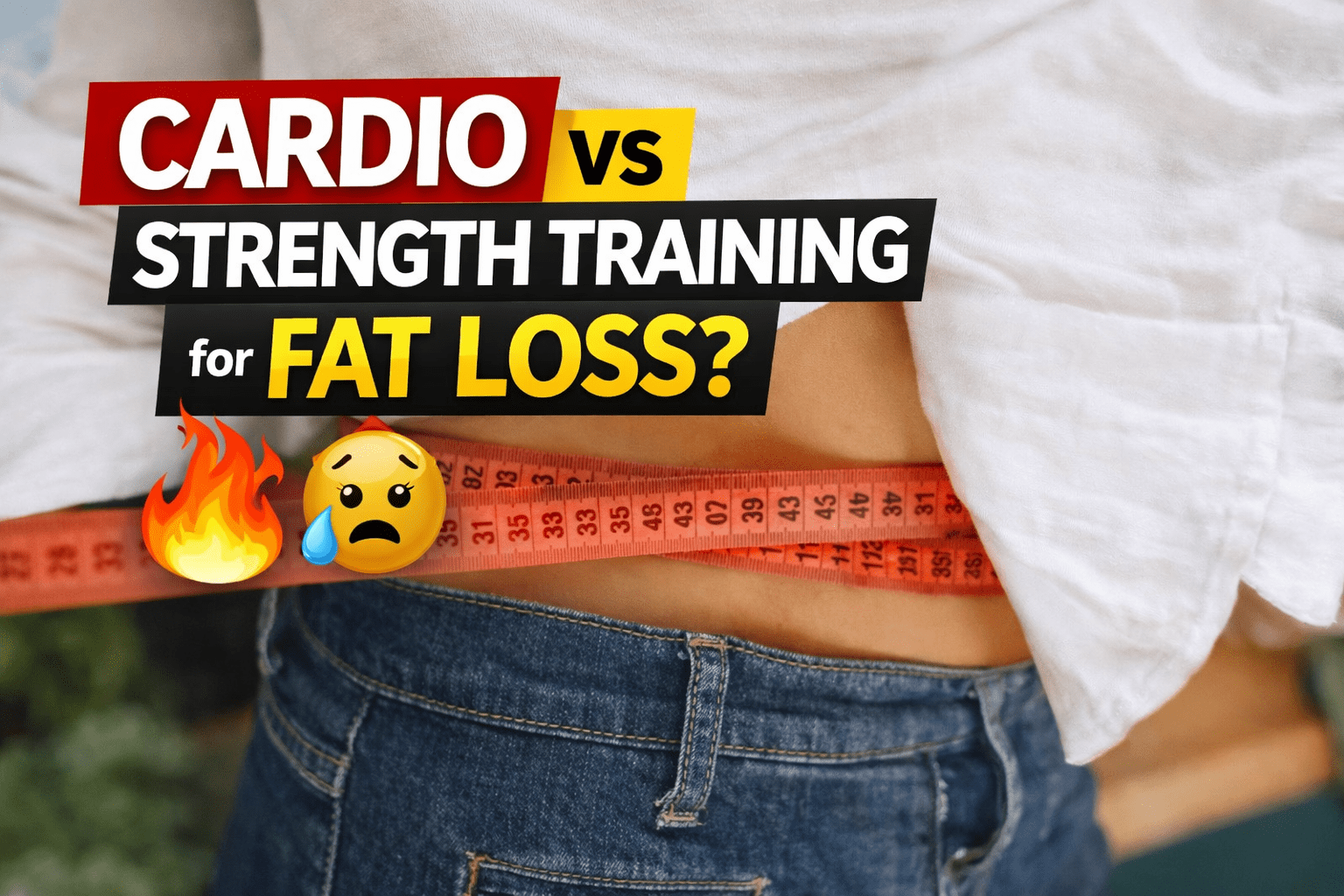
Fat loss is one of the most common fitness goals worldwide. Whether someone works out at home or in the gym, the biggest question remains the same: cardio vs strength training for fat loss — which one is better?
Some people believe cardio is the fastest way to burn fat, while others swear by strength training. The truth is not as simple as choosing one over the other. Both cardio and strength training play important roles in fat loss, but they work in very different ways.
This article explains everything clearly, using science-backed information and real-world logic, so you can understand how fat loss actually works and which approach suits your goal best.
Understanding Fat Loss Before Choosing a Workout
Before comparing cardio vs strength training for fat loss, it is important to understand what fat loss really means.
Fat loss happens when your body burns more calories than it consumes over time. This calorie deficit forces the body to use stored fat for energy. Exercise helps increase calorie burn, but nutrition, recovery, and consistency also play a major role.
No single workout can magically melt fat. The best fat loss results come from choosing the right training method and sticking to it long term.
What Is Cardio Training?
Cardio training refers to exercises that raise your heart rate and keep it elevated for a sustained period. These workouts primarily improve heart and lung health while burning calories.
Common Cardio Examples
- Running
- Walking
- Cycling
- Jump rope
- Swimming
- Stair climbing
Cardio workouts are popular because they are simple and easy to perform, even for beginners.
How Cardio Helps With Fat Loss
Cardio burns calories quickly. During a cardio session, your body uses energy immediately, which helps create a calorie deficit.
Benefits of Cardio for Fat Loss
- Burns a high number of calories in one session
- Improves cardiovascular health
- Easy to perform and beginner-friendly
- Helps reduce stress and improve mood
For people looking for quick calorie burn, cardio often feels effective. This is why many believe cardio is the best choice in the cardio vs strength training fat loss debate.
Limitations of Cardio for Fat Loss
While cardio burns calories, it has limitations when used alone for fat loss.
- Burns calories only during the workout
- Does not build much muscle
- Excessive cardio may slow metabolism
- Can lead to muscle loss if overdone
Relying only on cardio can sometimes cause weight loss without improving body composition.
What Is Strength Training?
Strength training focuses on resistance-based exercises that challenge muscles. These workouts build muscle mass, strength, and overall body structure.
Common Strength Training Exercises
- Squats
- Push-ups
- Pull-ups
- Lunges
- Deadlifts
- Bodyweight exercises
Strength training does not always feel intense during the workout, but its impact lasts much longer.
How Strength Training Helps With Fat Loss
Strength training supports fat loss in a different and more sustainable way.
When you build muscle, your body requires more energy even at rest. This increases your resting metabolic rate, meaning you burn more calories throughout the day.
Benefits of Strength Training for Fat Loss
- Builds lean muscle mass
- Increases metabolism
- Burns calories even after workouts
- Improves body shape and tone
- Prevents muscle loss
This is why many fitness experts favor strength training in the cardio vs strength training fat loss discussion.
Cardio vs Strength Training: Calorie Burn Comparison
Cardio typically burns more calories during the workout. Strength training may burn fewer calories per session but increases long-term calorie expenditure.
Key Difference
- Cardio = short-term calorie burn
- Strength training = long-term fat-burning boost
Fat loss is not only about how many calories you burn today, but how efficiently your body burns calories every day.
The Afterburn Effect Explained
One major advantage of strength training is the afterburn effect, also known as excess post-exercise oxygen consumption (EPOC).
After a strength workout, your body continues burning calories while repairing muscles. This means fat loss continues even after the workout ends.
Cardio has a smaller afterburn effect compared to strength training.
Which Is Better for Belly Fat?
Many people ask whether cardio or strength training is better for belly fat. The reality is that spot fat reduction is not possible.
Fat loss occurs throughout the body based on genetics and hormones. However, strength training combined with moderate cardio produces better overall fat loss results, including belly fat reduction.
Cardio vs Strength Training for Beginners
Beginners often feel more comfortable starting with cardio because it feels easier and less technical. However, adding basic strength exercises early helps build a strong foundation.
A balanced approach reduces injury risk and improves long-term results.
Mental Benefits of Cardio and Strength Training
Both training styles improve mental health.
Cardio helps reduce stress and anxiety by releasing endorphins. Strength training builds confidence, discipline, and mental toughness.
Mental consistency plays a big role in sticking to a fat loss plan.

Which One Preserves Muscle During Fat Loss?
Strength training is essential for preserving muscle while losing fat. Without resistance training, weight loss may include muscle loss, leading to a weaker physique.
This makes strength training a critical component in the cardio vs strength training fat loss comparison.
Can You Lose Fat Without Cardio?
Yes, fat loss is possible without cardio if strength training and nutrition are properly managed. However, cardio can speed up calorie burn and improve heart health.
The goal is not to eliminate cardio, but to use it strategically.
Best Training Strategy for Fat Loss
The most effective fat loss strategy combines both training styles.
Ideal Fat Loss Approach
- Strength training: 3–4 days per week
- Cardio: 2–3 days per week
- Focus on full-body movements
- Maintain a calorie-controlled diet
This balanced approach provides sustainable results.
Common Fat Loss Mistakes
Many people struggle because of these mistakes:
- Only doing cardio
- Avoiding strength training
- Overtraining without rest
- Ignoring nutrition
- Expecting fast results
Correcting these mistakes improves fat loss progress.
How Long Does Fat Loss Take?
Fat loss is a gradual process. Most people notice changes within 3–4 weeks of consistent training and proper diet.
Sustainable fat loss is better than rapid weight loss that cannot be maintained.
Cardio vs Strength Training: Which Should You Choose?
The answer depends on your goal.
If the goal is only calorie burn, cardio helps.
If the goal is long-term fat loss and better body shape, strength training is essential.
The best results come from combining both methods intelligently.
Final Verdict: Cardio vs Strength Training for Fat Loss
The debate of cardio vs strength training fat loss does not have a one-size-fits-all answer.
Cardio burns calories quickly and improves heart health.
Strength training builds muscle, increases metabolism, and improves body composition.
For real, lasting fat loss, strength training should be the foundation, with cardio used as a supportive tool.
Cardio vs Strength Training for Fat Loss: Which One Really Works Best?
Fat loss is one of the most searched fitness goals in the world. Almost everyone who starts working out asks the same question at some point: cardio vs strength training for fat loss — which is better?
Some people believe endless cardio is the fastest way to burn fat. Others argue that lifting weights is the real secret. The truth is more nuanced than choosing one side. Understanding how cardio and strength training work will help you lose fat more effectively and sustainably.
This in-depth guide explains cardio vs strength training fat loss from a scientific, practical, and real-world perspective so you can make the right choice for your body and lifestyle.
Understanding Fat Loss: How the Body Actually Burns Fat
Fat loss happens when your body uses more energy than it consumes. This energy deficit forces your body to tap into stored fat for fuel. Exercise plays a major role by increasing calorie burn and improving metabolic health.
However, not all workouts affect fat loss the same way. Cardio and strength training influence the body differently, which is why the debate around cardio vs strength training for fat loss exists.
What Is Cardio Training?
Cardio training, also known as aerobic exercise, involves continuous movement that raises your heart rate for an extended period.
Common Cardio Exercises
- Running or jogging
- Cycling
- Walking
- Jump rope
- Swimming
Cardio workouts primarily use oxygen to produce energy and are well-known for burning calories during the workout itself.
How Cardio Helps With Fat Loss
Cardio is effective for fat loss because it burns calories quickly. The longer and more intense the session, the more calories you burn.
Key Benefits of Cardio for Fat Loss
- Burns calories fast
- Improves heart health
- Enhances endurance
- Easy to perform for beginners
For people who enjoy movement and can stay consistent, cardio can create a calorie deficit efficiently.
Limitations of Cardio for Fat Loss
While cardio burns calories during exercise, it has some limitations when used alone.
- Muscle loss can occur with excessive cardio
- Metabolism may slow over time
- Fat loss can plateau
- Less impact on body shape and muscle tone
This is where the cardio vs strength training fat loss discussion becomes important.

What Is Strength Training?
Strength training involves resistance exercises designed to build muscle and strength. This includes bodyweight training, free weights, and resistance bands.
Common Strength Training Exercises
- Squats
- Push-ups
- Deadlifts
- Lunges
- Pull-ups
Unlike cardio, strength training focuses on muscular effort rather than continuous movement.
How Strength Training Supports Fat Loss
Strength training does not always burn as many calories during the workout, but its long-term fat loss benefits are powerful.
Key Benefits of Strength Training for Fat Loss
- Builds lean muscle mass
- Increases resting metabolism
- Improves body composition
- Enhances strength and posture
Muscle tissue burns more calories at rest than fat tissue. This means your body becomes more efficient at burning fat even when you are not exercising.
Strength Training and the Afterburn Effect
One major advantage in the cardio vs strength training fat loss comparison is the afterburn effect.
Strength training causes micro-tears in muscles, which require energy to repair. This process increases calorie burn for hours after the workout ends, helping with fat loss over time.
Cardio vs Strength Training: Fat Loss Comparison
Calorie Burn During Workout
- Cardio burns more calories per session
- Strength training burns fewer calories immediately
Metabolic Impact
- Cardio has short-term calorie burn
- Strength training increases long-term metabolism
Muscle Preservation
- Cardio alone may reduce muscle mass
- Strength training preserves and builds muscle
Sustainability
- Excessive cardio can feel exhausting
- Strength training improves long-term adherence
This comparison shows why the cardio vs strength training for fat loss debate has no single winner.
Which One Burns More Fat?
The answer depends on time, intensity, and consistency.
Cardio burns fat during the workout. Strength training helps your body burn fat all day. When comparing cardio vs strength training fat loss, strength training often wins for long-term results, while cardio is effective for short-term calorie burn.
Fat Loss vs Weight Loss: Important Difference
Weight loss includes water, muscle, and fat. Fat loss focuses only on reducing fat while preserving muscle.
Strength training is superior for fat loss because it protects lean muscle mass, leading to a healthier and more toned body.
Can You Lose Fat With Only Cardio?
Yes, fat loss is possible with cardio alone if you maintain a calorie deficit. However, the body may adapt, making results slower over time.
Many people lose weight with cardio but struggle with loose skin, muscle loss, and plateaus.
Can You Lose Fat With Only Strength Training?
Yes, especially when workouts are intense and consistent. Strength training improves body composition even if the scale does not change much.
This is why people often look leaner without dramatic weight changes.
The Best Approach: Combining Cardio and Strength Training
The most effective fat loss strategy is combining both training styles.
Benefits of Combining Both
- Higher total calorie burn
- Better muscle preservation
- Improved endurance and strength
- Reduced fat loss plateaus
This balanced method resolves the cardio vs strength training fat loss debate by using the strengths of both.
How Often Should You Do Each?
A balanced weekly routine could look like this:
- Strength training: 3–4 days
- Cardio: 2–3 days
- Rest or active recovery: 1–2 days
This approach supports sustainable fat loss without burnout.

Nutrition’s Role in Fat Loss
No workout can out-train poor nutrition. Diet plays the biggest role in fat loss.
Basic Nutrition Principles
- Maintain a calorie deficit
- Eat sufficient protein
- Focus on whole foods
- Stay hydrated
Exercise supports fat loss, but nutrition drives results.
Common Mistakes That Slow Fat Loss
Many people fail to see results due to these mistakes:
- Doing only cardio
- Ignoring strength training
- Under-eating protein
- Overtraining without recovery
- Inconsistent workouts
Avoiding these mistakes improves fat loss efficiency.
How Long Does It Take to See Results?
Fat loss depends on consistency and lifestyle.
- Improved energy: 1–2 weeks
- Strength gains: 2–3 weeks
- Visible fat loss: 4–6 weeks
Patience is essential.
Cardio vs Strength Training for Beginners
Beginners should start with simple routines and gradually increase intensity.
Strength training builds a foundation, while cardio improves endurance. Together, they create balanced progress.
Fat Loss for Busy People
Short strength workouts combined with brief cardio sessions are ideal for busy schedules.
Even 30 minutes per day can lead to noticeable fat loss when done consistently.
Final Verdict: Cardio vs Strength Training for Fat Loss
The debate over cardio vs strength training fat loss does not have a one-size-fits-all answer.
Cardio burns calories quickly. Strength training transforms your body long-term. The best fat loss results come from combining both with proper nutrition and recovery.
Final Thoughts
Fat loss is not about choosing sides. It is about understanding how your body works and using smart strategies.
When you balance cardio and strength training, stay consistent, and eat well, fat loss becomes sustainable and achievable.
Choose progress over perfection, and focus on habits that last.